It's Not A Circle, It's A Spiral
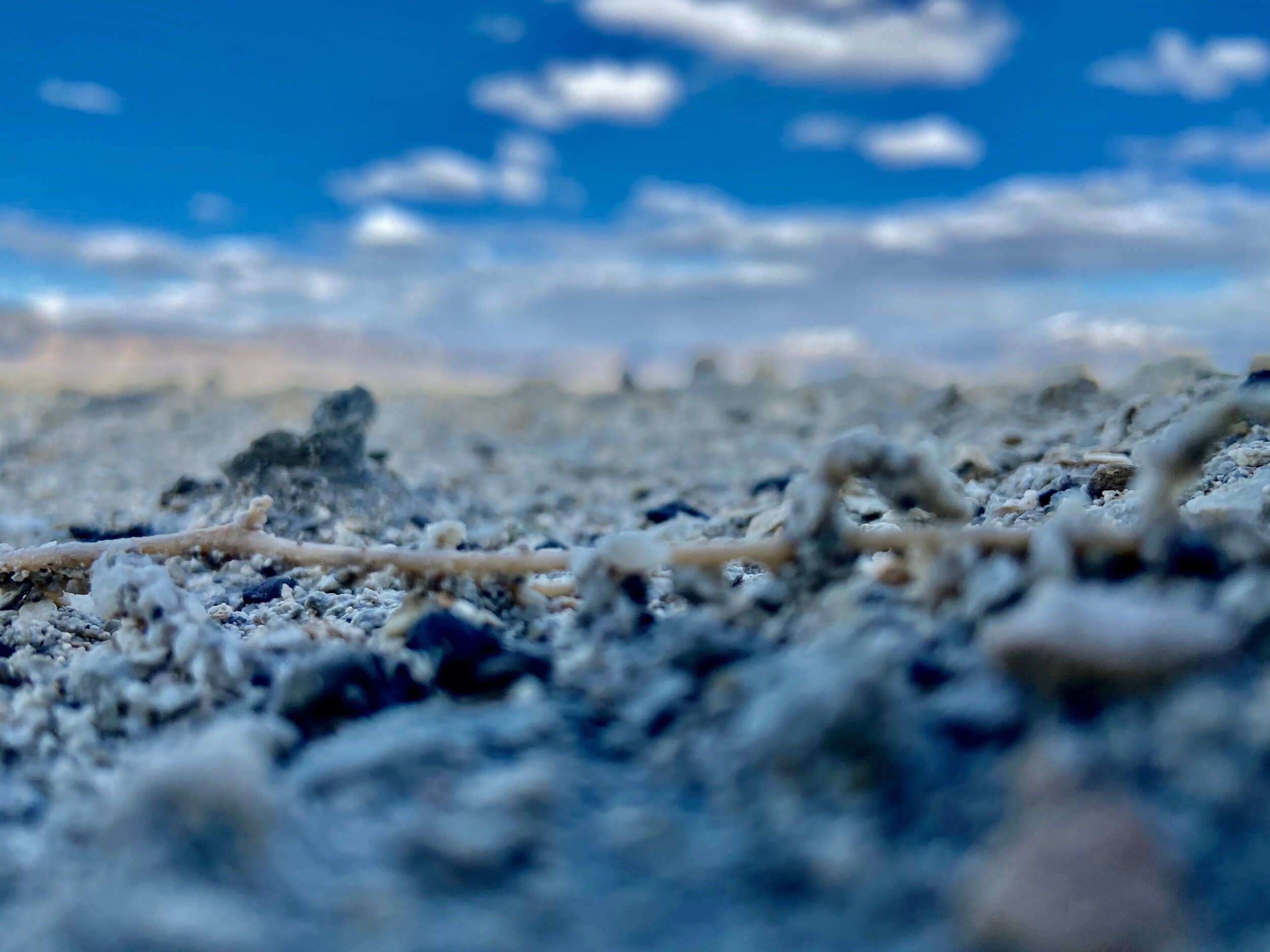
photo by Perri Howard
I'm standing on a salty shore of wet sand and lava rock, looking across a landscape that superficially presents as a beach, but reveals itself to be briny mudflat. Crystalline salt formations bedazzle the surface of a matte grey expanse. This is the northern extent of Great Salt Lake, where the water runs red, and salty waves lap against a pepper shore.

photo by Craig Howard
I begin to ride my bike in lazy circles, cruising over the crust, and sinking into the quickness of the mud, dismounting to walk my bike with slurpy steps, back to stable ground, only to sink again.
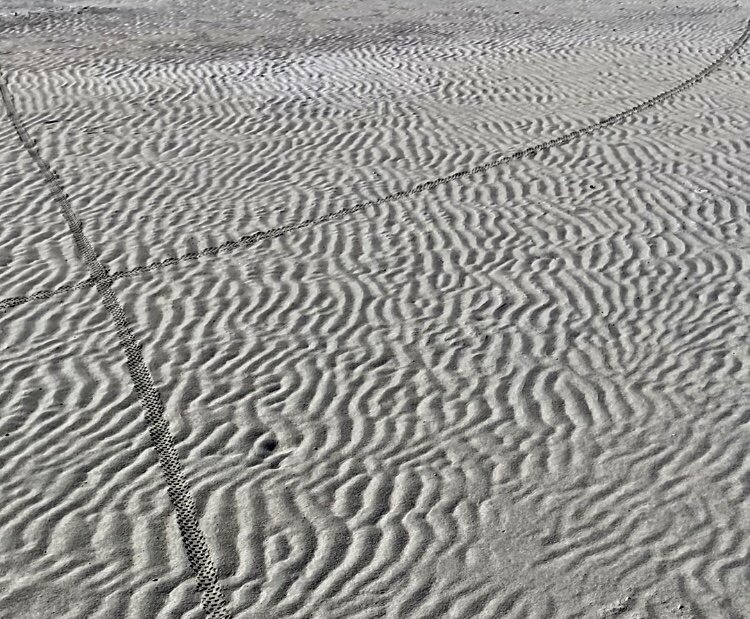
photo by Perri Howard
In the center of these circular impressions is a spiral, the Spiral Jetty. A monumental artwork of international fame, laying there in the mud, in the evening, plain as day.

Robert Smithson - Spiral Jetty - 1970 photo by Perri Howard
Lucy Lippard's Overlay was my introduction to this work. I was a nineteen-year-old undergraduate at The Evergreen State College. My favorite artist was Georgia O’Keefe. I knew that sculpture existed as a medium, but real artists were painters. Rigid thoughts from such a young radical.
The cover of this book features an image of the sun, low on the horizon, framed by Nancy Holt's monumental earthwork, "Sun Tunnels." This installation is comprised of four gigantic concrete cylinders placed in the desert, but arranged by the heavens. On the solstice and equinox, the sun passes through the center of one pair of the four cylinders. A seemingly haphazard arrangement of fist-sized drill-holes frame additional celestial events. My artwork, at the time, was comprised of poorly-executed drawings and misspent paintings. Her art captured the sun. I knew I had to dig deeper.

Sun Tunnels by Nancy Holt and Spiral Jetty by Robert Smithson are two iconic examples from the Earth Art Movement of the 70s. These artists and their comrades were too confined by the gallery walls and 30-day rotation of art exhibitions in Manhattan. Their concepts demanded a different space and time, so they headed west, procuring land and installing artwork that was remote, site-specific, and of a monumental scale. These works were designed to interact with the changing conditions of the land, the weather, and the universe.
These artists weren’t painters, but I admired them and wanted to become one. I wanted to engage the land, to work large, to reach audiences that may, or may not, see my work as art - that may, or may not, ever see my work at all.

Nancy Holt - Sun Tunnels - 1973-1976 photo by Perri Howard
Soon after Spiral Jetty was built, water levels rose in Great Salt Lake and six-thousand tons of salty earth art went underwater. This submergence happened fairly quickly. It was not planned, but not prevented either. I hoped and dreamed to one day see this work for real, but how?
Spiral Jetty held its breath for thirty years.
In 2002, drought conditions caused the lake to recede and the artwork reemerged. Spiral Jetty was revealed intact, a little sandier, but still accessible, and still a spiral.
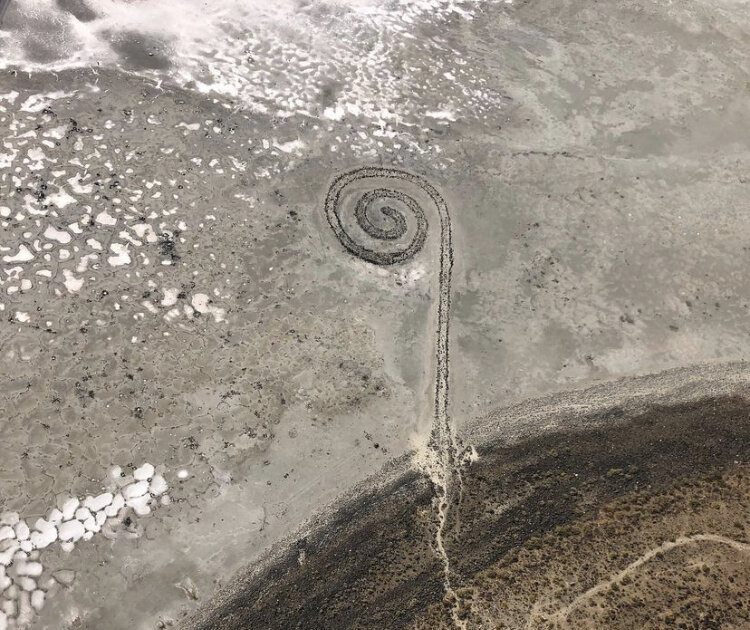
Robert Smithson - Spiral Jetty - 1970 photo by Craig Howard
After a night of broken sleep in the loosely-defined Spiral Jetty parking lot, I ventured out along the rough black basalt rocks, circling in space, but moving toward the center.
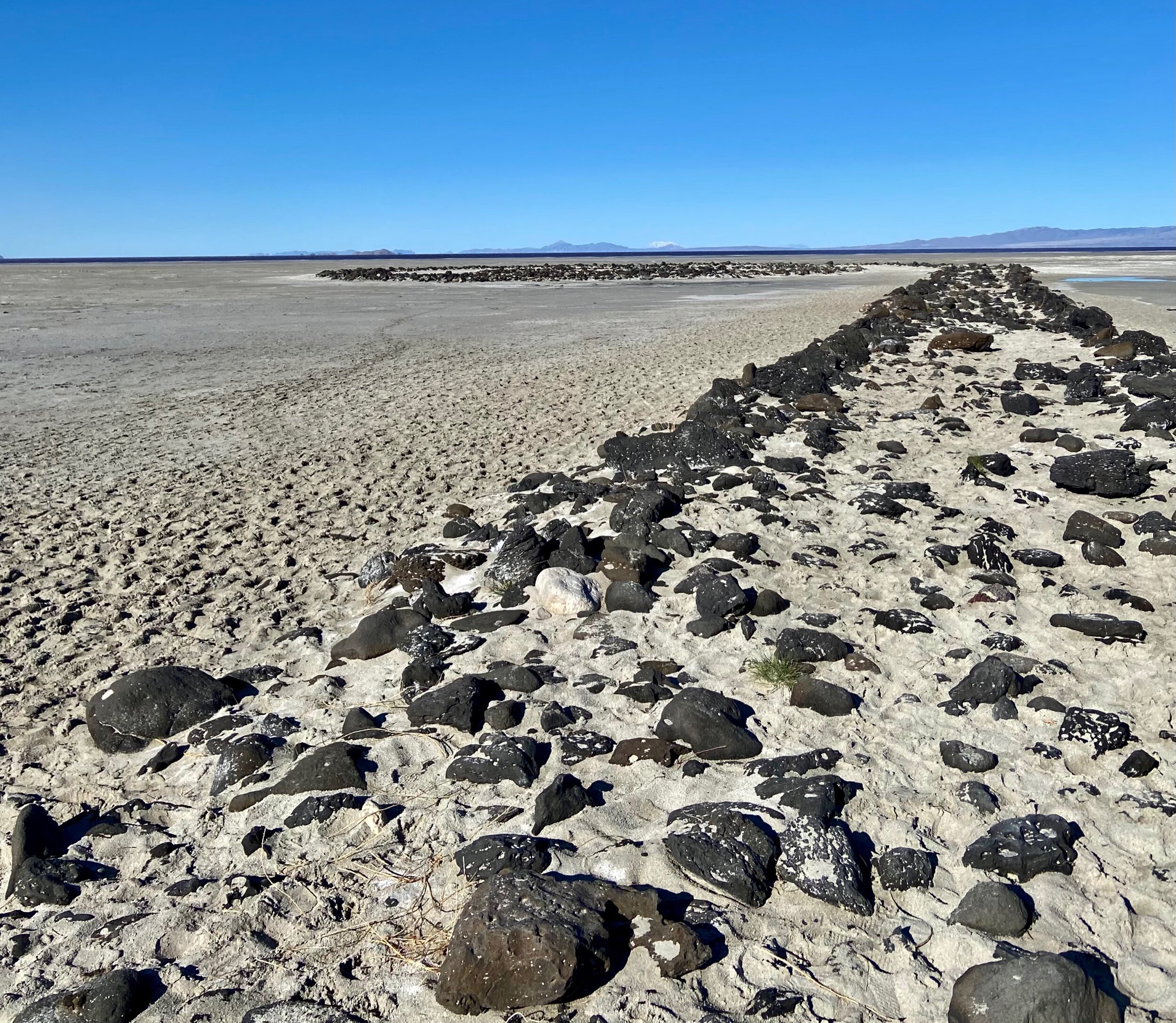
Robert Smithson - Spiral Jetty - 1970 photo by Perri Howard
I thought about recent challenges in my work, the scarcity of time with any sort of audience and long silences between. Spiral Jetty went underwater, but it never went away. It endured, holding on to rock-fulls of air until it was time to rise to the surface and breathe again.
I wonder what is submerged in me, what is hidden but still endures, and what could be rising to the surface, ready to breathe.